

The Automotive AC Parts Sri Lanka Sourcing Blueprint: Fitment, Market Pricing & Counterfeit Prevention
A sudden blast of humid, lukewarm air in gridlocked Colombo traffic isn't just uncomfortable it is a financial fork in the road. In Sri Lanka's automotive aftermarket, replacing an AC component without technical due diligence often results in repeat labour charges, incompatible fitments, and premature compressor seizures.
Sourcing reliable automotive AC parts in Sri Lanka requires navigating severe import variances, widespread counterfeit packaging, and micro-climate wear factors unique to the island.
This guide delivers an engineer-level breakdown of genuine auto ac parts in sri lanka, replacement cost benchmarks in LKR, vehicle-specific requirements, and the exact protocols required to verify component authenticity before you buy.
1. Quick-Reference: 2026 Sri Lankan Market Price Benchmarks
To avoid overpaying at retail auto spare shops or mechanic workshops, use these baseline pricing estimates for Japanese, Indian, and European passenger vehicles across the Western and Central provinces:
| AC Component | Japanese Compact / Sedan (Toyota, Suzuki, Honda) | European / Luxury (Benz, BMW, Audi) | Indian Hatchback (Maruti, Hyundai) | Warranty Expectation |
|---|---|---|---|---|
| New Compressor (OEM/Tier-1) | LKR 65,000 – 125,000 | LKR 140,000 – 280,000+ | LKR 45,000 – 75,000 | 6 – 12 Months |
| Reconditioned Compressor | LKR 28,000 – 48,000 | LKR 65,000 – 110,000 | LKR 20,000 – 35,000 | 1 – 3 Months (Testing) |
| Condenser (Aluminium Multi-Flow) | LKR 18,000 – 38,000 | LKR 42,000 – 95,000 | LKR 14,000 – 24,000 | Replacement Warranty |
| Evaporator / Cooling Coil | LKR 16,000 – 32,000 | LKR 38,000 – 85,000 | LKR 12,000 – 22,000 | 6 Months |
| Expansion Valve (Block/Flange) | LKR 4,500 – 9,500 | LKR 12,000 – 26,000 | LKR 3,500 – 6,500 | Functional Check |
| Cabin Filter (Carbon/HEPA) | LKR 1,800 – 4,500 | LKR 4,500 – 12,000 | LKR 1,200 – 2,800 | Consumable |
Note: Labour charges for dashboard removal (cooling coil changes) typically range between LKR 8,000 and LKR 25,000 depending on vehicle interior complexity.
2. Vehicle Make Breakdown: Match Your Chassis to the Correct Part
Different manufacturers engineer their climate systems around distinct mechanical tolerances. Buying generic Car AC Spares without cross-referencing your engine and chassis code will lead to pulley alignment issues or improper high-pressure cut-offs.
Japanese Domestic Market (JDM) Vehicles (Toyota, Suzuki, Nissan, Honda)
- Popular Chassis: Wagon R (MH34/44/55), Premio/Allion (NZT260), Vitz/Yaris (KSP130), Vezel (RU3), GP5 Fit.
- Component Focus: Denso and Sanden variable-displacement compressors.
- Key Fitment Watch: Pay close attention to clutchless swash-plate compressors (common in modern Japanese hybrids). These run continuously and use internal solenoid control valves rather than magnetic clutches.
Indian City Runabouts (Maruti Alto, Hyundai Grand i10, Renault Kwid)
- Component Focus: Sub-compact 3-cylinder engines have lower torque reserves.
- Key Fitment Watch: Always check the compressor displacement CC rating. Installing an oversized aftermarket compressor will bog down a 660cc–1000cc engine, causing rough idling and sudden stalling when the climate control kicks on.
European Platforms (BMW, Mercedes-Benz, Volkswagen)
- Component Focus: Valeo, Mahle, and Behr climate modules.
- Key Fitment Watch: European climate control systems rely on complex CAN bus sensor arrays (evaporator temperature sensors, sunlight angle sensors, and multi-zone blend doors). Mechanical parts must be calibrated precisely to prevent onboard ECU fault codes.
3. The Counterfeit Identification Protocol (How to Spot Fake AC Parts)
Due to high demand and import fluctuations, counterfeit AC parts particularly compressors, expansion valves, and refrigerants frequently circulate in the local market. Use this physical audit checklist before accepting any spare:
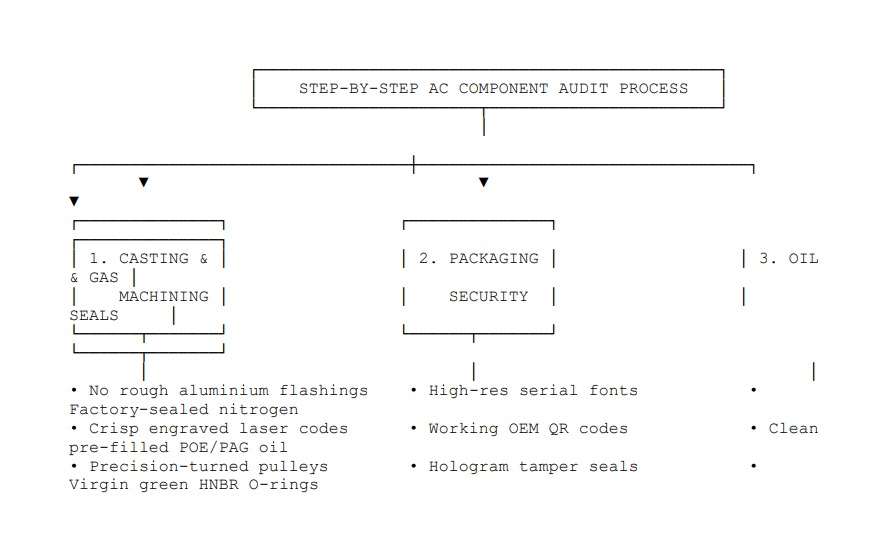
The Warning Signs:
- Laser vs. Stamped Serial Numbers: Authentic Denso, Sanden, and Valeo parts feature deep, pin-sharp laser engraving on the metal housing. Fake units frequently use misaligned ink stamps or blurry acid-etched lettering.
Refrigerant Gas Adulteration: Never allow a technician to charge your car with unbranded or suspiciously cheap R134a/R1234yf gas. Substandard refrigerants often contain LPG or industrial solvents, which cause chemical acid etching inside aluminium coils within 90 days.
Pre-charged Nitrogen Plugs: Genuine brand-new cooling coils and condensers arrive factory-sealed with pressurized plastic end plugs. When you pull the plug, you should hear an immediate hiss of releasing nitrogen. If there's no pressure release, the unit has pinhole leaks or compromised seals.
4. The Technician's Pre-Installation Checklist
Purchasing a top-grade component is only half the battle. If your installation team skips standard servicing protocols, your new parts will degrade rapidly.
Demand that your AC technician follows these four mandatory steps during installation:
Step 1: Complete Closed-Loop Line Flush
If your previous compressor suffered mechanical failure ("black death"), microscopic metal shavings are trapped inside the condenser and rubber lines. Flushing with dedicated solvent (such as 141b) clears contaminated residue.
Step 2: Mandatory Receiver-Drier Replacement
A receiver-drier acts like an oil filter for your climate system. Once opened to ambient air, its desiccant bag saturates with moisture in under 20 minutes. Always install a brand-new drier whenever the AC loop is opened.
Step 3: Evacuation & Vacuum Decay Test
The system must be pulled down to a minimum of -29.9 inHg (-1 bar) vacuum for at least 30 minutes. This boils off internal moisture and tests line integrity. If the needle climbs on the manifold gauge after the vacuum pump is turned off, a leak exists.
Step 4: Correct Oil Viscosity Balancing
- PAG 46: Standard for most Japanese belt-driven systems.
- PAG 100 / 150: Required for specific heavy-duty or older compressor geometries.
- POE (Dielectric Synthetic): Non-negotiable for all Hybrid and EV electric scroll compressors.
5. Sourcing Strategy: Where to Buy Genuine Auto AC Parts in Sri Lanka
To balance pricing, warranty security, and fitment accuracy, adopt this procurement strategy:
- For Structural & Internal Wear Items (Evaporator, Condenser, Valves): Buy brand-new aftermarket components from recognized Tier-1 brands (Denso, CoolGear, Valeo, Sanden).
For Major Mechanical Units on Tight Budgets (Compressors): Seek out tested, un-opened Japanese reconditioned assemblies backed by at least a 30-to-90-day workshop replacement guarantee.
- For Preventative Wear (Filters, Belts, Seals): Never compromise. Buy genuine OEM cabin filters and HNBR high-temperature O-rings.
Secure High-Performance Cooling for Every Drive
Your vehicle's air conditioner is a delicate, high-pressure ecosystem. Investing in precision-engineered, authentic automotive AC parts in Sri Lanka protects your engine from mechanical overload, cuts fuel consumption caused by compressor drag, and keeps your cabin comfortable in any weather.
If you are diagnosing an AC fault, comparing quotes, or sourcing rare Car AC Spares for Japanese, European, or Indian vehicles, partner with established replacement part specialists. Explore verified inventories and technical fitment support directly through MKF Auto Parts to get your vehicle cooling at peak performance today.